OTIUM CUM DIGNITATE 2017
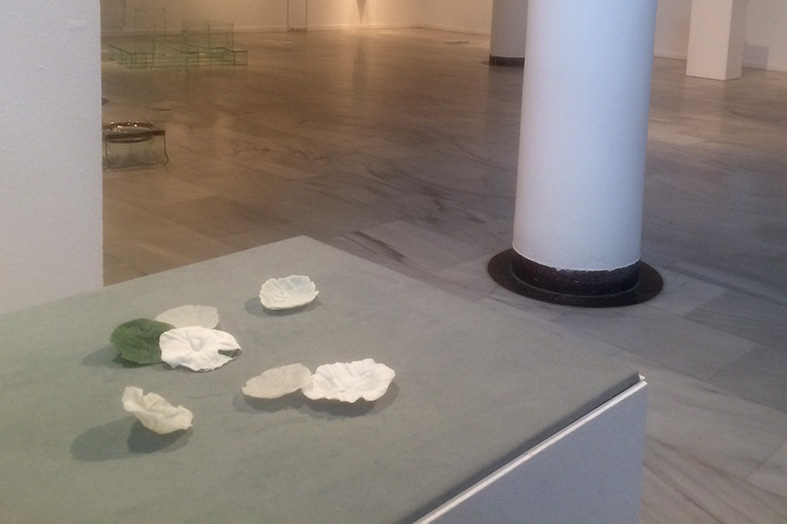
En 2017 fui invitada a participar en la exposición colectiva Working Glass en el Museo de Arte en Vidrio de Alcorcón. El reto consistía en crear una obra donde el vidrio fuese el material principal, trabajando junto al técnico del museo.
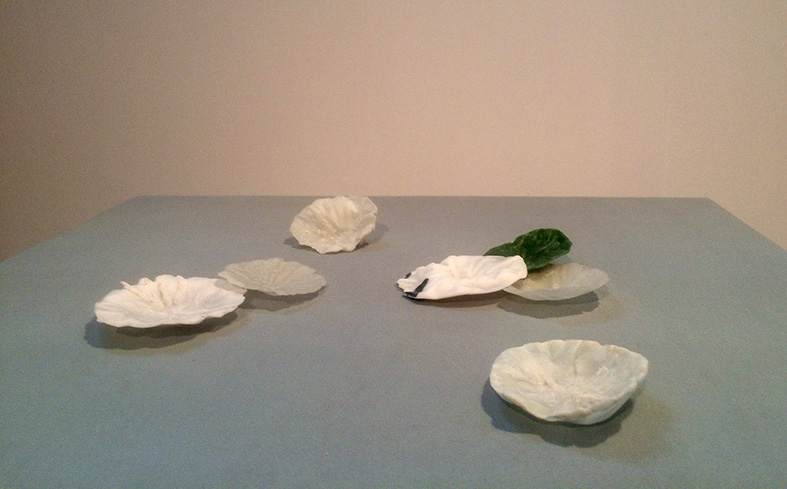
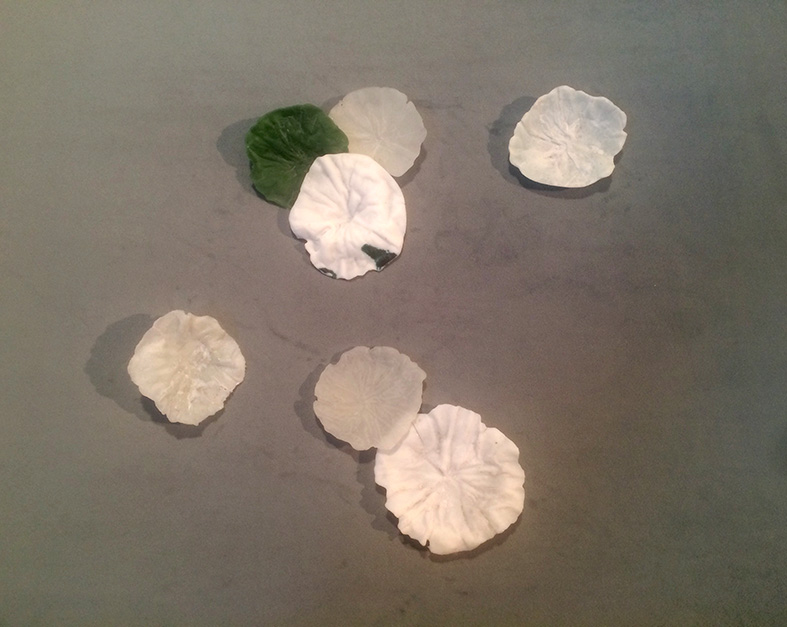
Mi propuesta, titulada Otium cum Dignitate (El ocio con dignidad), consistía en una instalación formada por pequeñas piezas de vidrio con formas orgánicas que reproducian los restos de una fiesta, como si el tiempo de ocio se hubiese cristalizado en el tiempo.
El proyecto partía de una reflexión sobre el concepto de ocio, entendido como un espacio de libertad, contemplación y pensamiento. Quería unir dos tiempos distintos: el ocio en el que nace la idea y el trabajo en el que se materializa.
Durante el proceso, el vidrio se convirtió en una metáfora de ese doble estado: fluido y maleable al principio, sólido y frágil al final.
El resultado fue una obra ambigua: para algunos, las formas parecían pétalos o nenúfares; para otros, lo que representaban, papelinas. Esa dualidad —entre belleza y marginalidad, entre lo que se sabe y lo que se ignora— sigue siendo el eje central de muchos de mis proyectos.
In 2017, I was invited to take part in the group exhibition Working Glass at the Museum of Glass Art in Alcorcón. The challenge was to create a work in which glass would be the main material, working hand in hand with the museum’s glass technician.
My proposal, titled Otium cum Dignitate (“Leisure with Dignity”), consisted of an installation made of small glass pieces shaped like organic forms that reproduced the remains of a party, as if leisure time had been crystallized and frozen in place.
The project began with a reflection on the concept of leisure, understood as a space of freedom, contemplation, and thought. I wanted to bring together two different temporalities: the leisure in which the idea is conceived, and the labor in which the piece is materially produced. Throughout the process, glass became a metaphor for that dual state—fluid and malleable at first, solid and fragile in the end.
The result was an ambiguous work: for some viewers, the forms resembled petals or water lilies; for others, they clearly evoked drug wraps. This duality—between beauty and marginality, between what is recognized and what remains unseen—continues to be a central axis in many of my projects.
My proposal, titled Otium cum Dignitate (“Leisure with Dignity”), consisted of an installation made of small glass pieces shaped like organic forms that reproduced the remains of a party, as if leisure time had been crystallized and frozen in place.
The project began with a reflection on the concept of leisure, understood as a space of freedom, contemplation, and thought. I wanted to bring together two different temporalities: the leisure in which the idea is conceived, and the labor in which the piece is materially produced. Throughout the process, glass became a metaphor for that dual state—fluid and malleable at first, solid and fragile in the end.
The result was an ambiguous work: for some viewers, the forms resembled petals or water lilies; for others, they clearly evoked drug wraps. This duality—between beauty and marginality, between what is recognized and what remains unseen—continues to be a central axis in many of my projects.

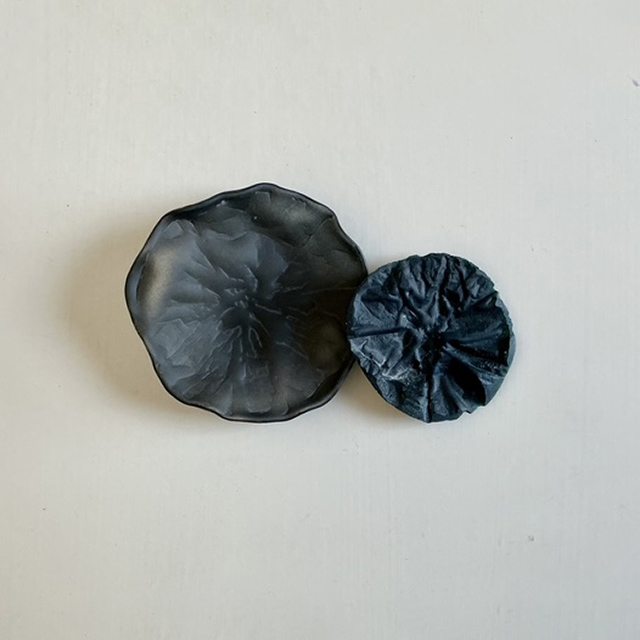
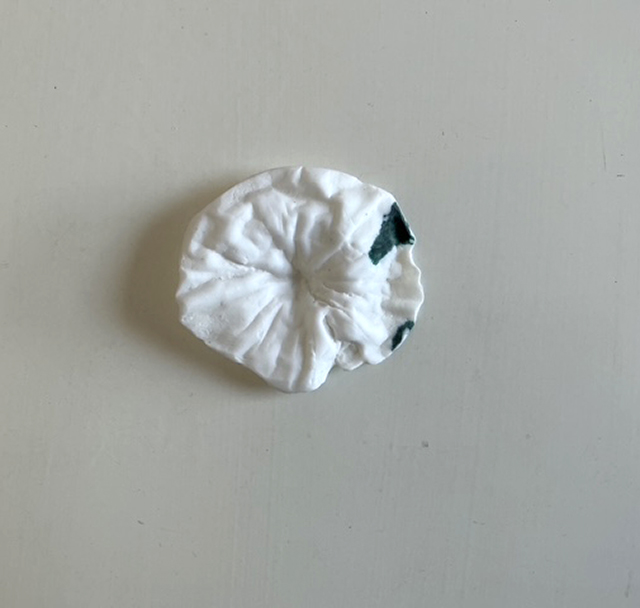
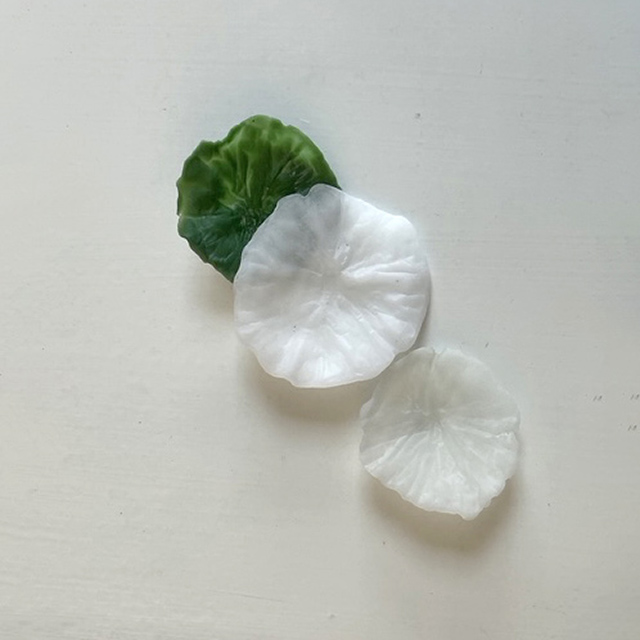
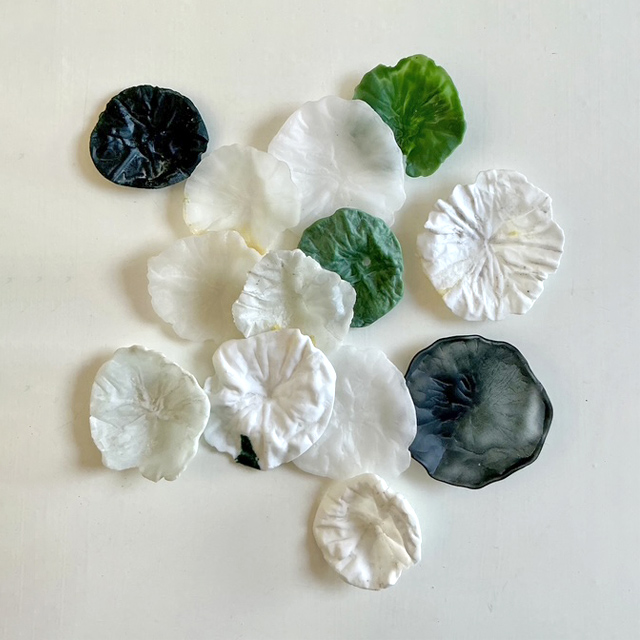
Colección de papelas de vidrio 2017
Papelas de vidrio.
Exposición colectiva “Working glass” 2018.
Museo Municipal de Arte Contemporáneo en Vidrio de Alcorcón. Madrid